Vibe coding personal apps - Random Notes
Vibe Coding Personal Apps - Random Notes
It used to take me many days of my personal time to code something personal, usually involving things like:
- Think about what I need
- Create the boilerplate
- Think about the architecture, design, features, etc
- Create the app, a basic PoC
- Iterate, add features, improve UX, etc
Didn’t need to be perfect but still a lot of coding and iterations.
Now with a few hours of vibe coding, I get a tool exactly to my taste, same thing but faster, tho:
- I haven’t looked at the code, don’t care about quality
- It stores things on JSON files that I git track
- I had to accept part of what the AI decided, since I did not prompt every little detail
- It looks 80% how I want it, and it works
I know I would not ship this to millions of users, but it is perfect for my needs, and I can iterate as much as I want.
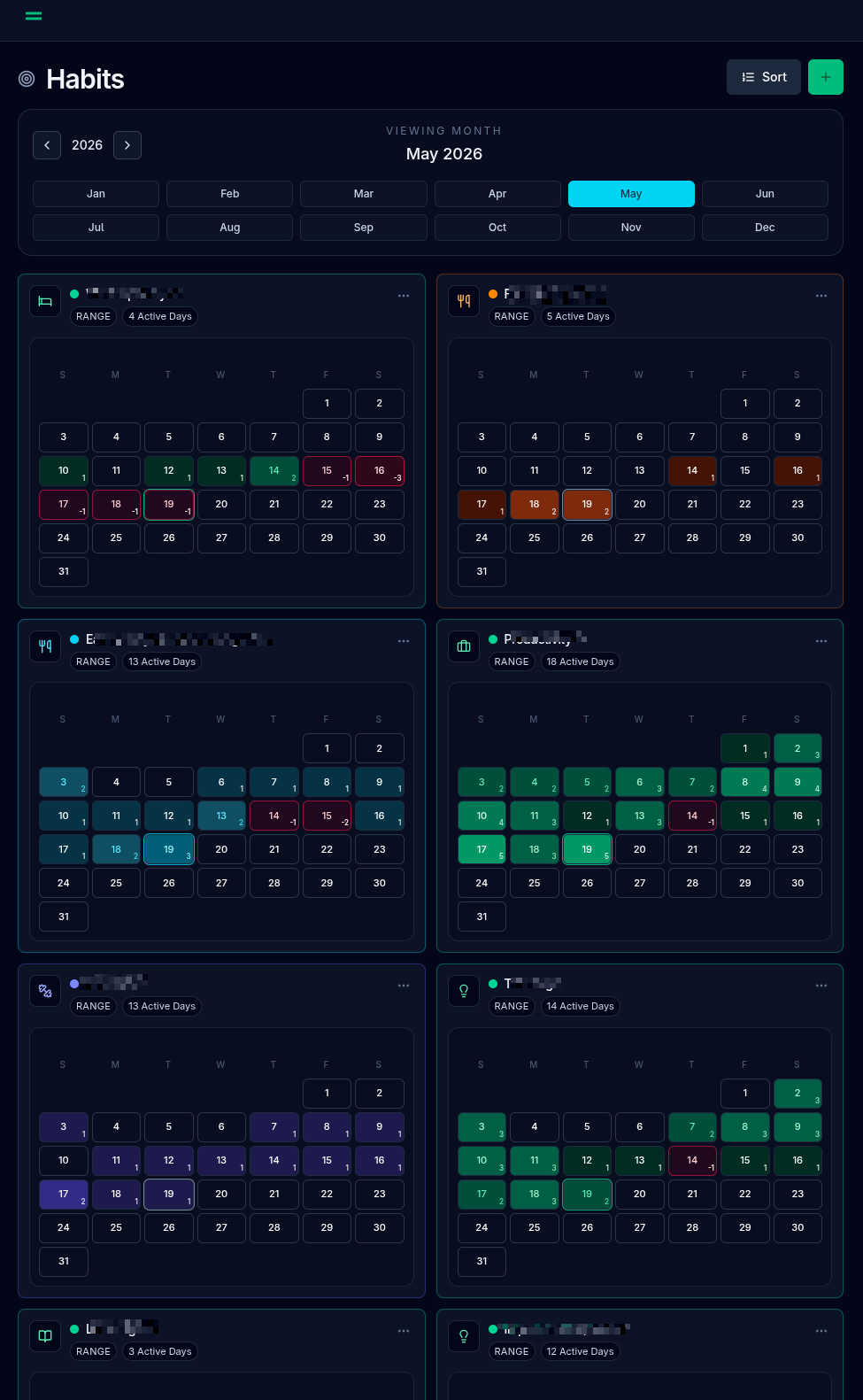
Here is a simple example of one of those vibe coded personal apps, where I wanted to be able to do habit tracking with range (positive, negative):
A few things I have learned on this experience with vibe coding personal apps:
- Start with the agent creating a boilerplate with the tech/setup you like
- Ask it from the start to create documentation on coding style, patterns, tech stack, etc
- You can try an idea in a few minutes/hours, and then trash it if you want
- You need to be very careful about some common problems with AI agents:
- Git for everything, be sure you can tell the agent to revert, and always commit
- Make sure your instructions mention being careful with existing data, and have a way to get it back
- Usually a single coding agent per tool/feature is best, the code is the documentation
Now, as a developer that was used to using my brain for hard problems all the time, with vibe coding like this, where you don’t really care about the details or the implementation, you start to feel like you’re getting a bit lazy and even dumb from time to time.
This might be both good and bad.
- You lose some of your coding practice time, what you don’t practice, you might forget
- You start to wonder sometimes if this is actually faster, or you are just being lazy
- You stop learning new things in detail, no longer an expert, just the bird’s eye view of things
- You become a tourist of the codebase, instead of the usual full graph in your brain of how the codebase works
- You start caring more about UX, design, and other non-technical things, since you’re not the one implementing fully
So, I realize now with AI there are multiple ways to code, depending on the type of task/project, coding is no longer a single process.
- Learning new technical stuff can now be done interactively with a coding agent
- Doing production-ready code makes the agent become your second hand, and sometimes you the baby sitter
- You have agents you can delegate things to, but you need to have processes/instructions depending on the task you’re delegating to them
- Documentation becomes important, the agents don’t have your memory, they start fresh every time
- Documentation might be different for humans and agents, not the same needs, not the same level of detail
So, I used to code the same way for almost everything, the only difference was usually the level of quality, personal vs production.
Now, I have completely different processes for everything.
And it is fun.